Contraceptive Implant: The FPA Guide

This page is licenced to:

Choices LBG

Back to library

This content is owned by the Family Planning Association. Reproducing or distributing this content without our permission or outside the terms of the FPA Medical Professional license is a breach of our copyright.

Last update: May 2026
Review date: June 2027
Version: 16.02.26.05.W

Contraceptive Implant: The FPA Guide

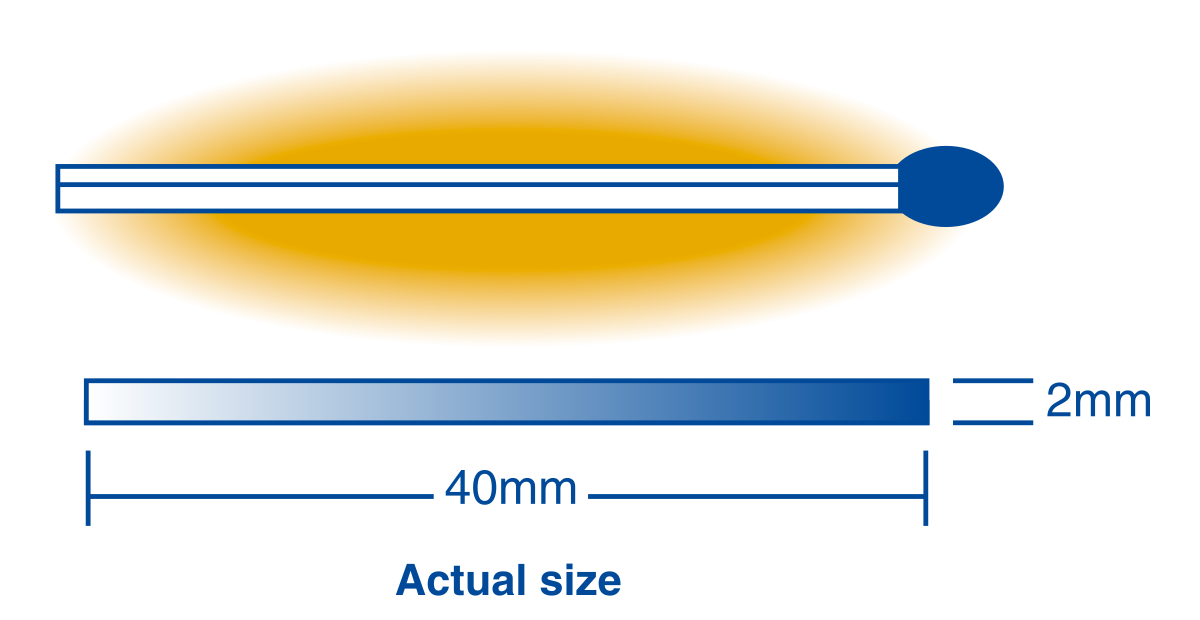
A contraceptive implant is a small, flexible rod. It’s made of plastic.

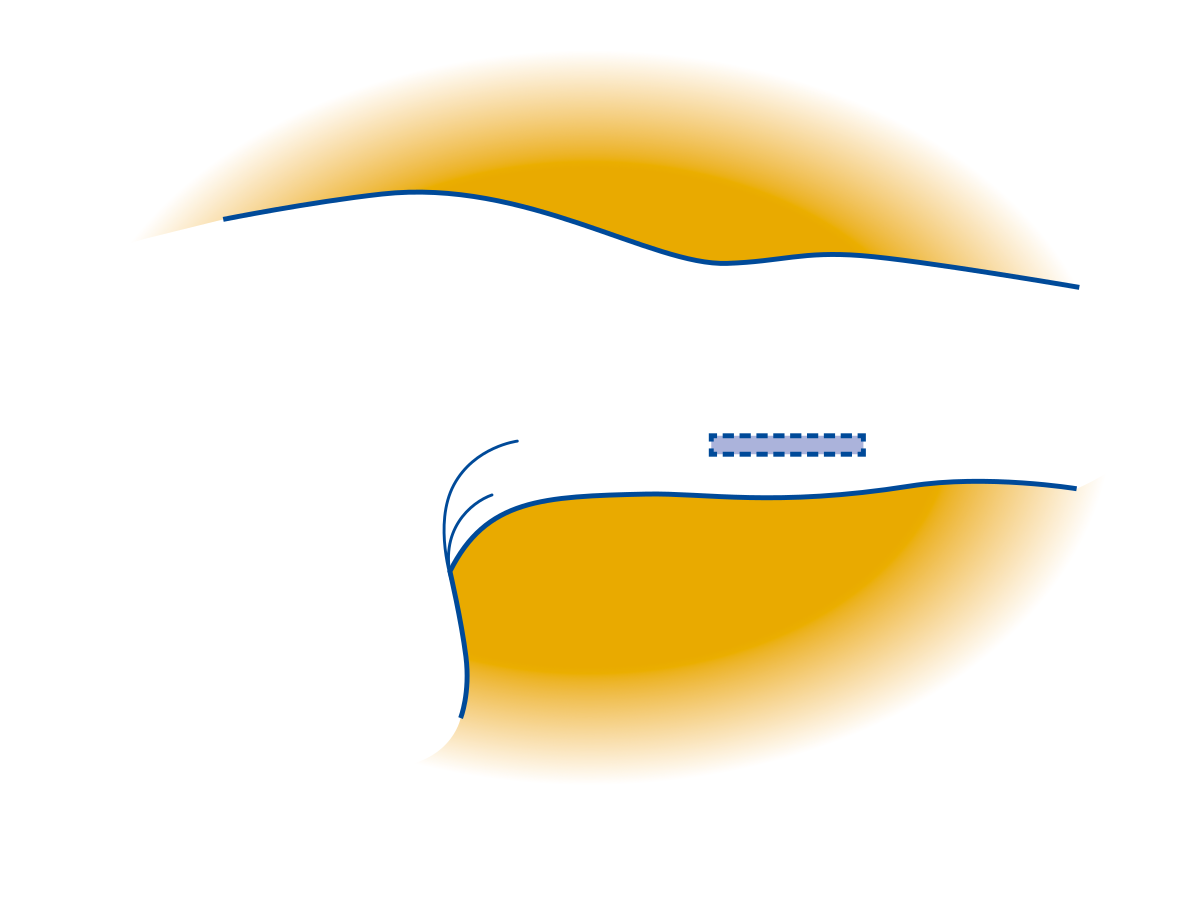
It’s placed just under the skin of your upper arm to stop you getting pregnant.

It releases a progestogen hormone similar to the natural progesterone made by the ovaries.

An implant works as contraception for 5 years. You can have it taken out sooner if you want to.

Contraceptive Implant: The FPA Guide

The implant is the most effective method of contraception. It’s well over 99% effective.

Around 1 in 1,000 implant users will get pregnant in the first year of use.

If 100 women who could get pregnant don’t use any contraception, 80 to 90 will get pregnant in a year.

The implant is very effective because it doesn’t depend on you remembering to use it.

  • The main way it works is to stop your ovaries releasing an egg each month (ovulation)
  • It thickens the mucus in your cervix (entrance to the womb). This makes it difficult for sperm to move through it and reach an egg. It makes your uterus (womb) lining thinner so a fertilised egg is less likely to implant

Most people who need contraception can use an implant.

The healthcare professional fitting your implant will need to ask about your own and your family’s medical history. This is to check if the implant is suitable. Do mention any illnesses or operations you’ve had and any medicines you’re taking.

An implant may not be suitable for you if:

It may not be suitable if you have, or had in the past:

  • breast cancer
  • unexplained vaginal bleeding (for example, bleeding between periods or after sex)
  • heart disease or stroke
  • serious liver disease

If the implant is suitable for you, you can use it until your menopause or until you’re aged 55. After age 55, you’re extremely unlikely to get pregnant even if you haven’t yet reached menopause.

You need to get the implant replaced every 5 years for as long as you use it.

You can get an implant fitted for free at:

  • a sexual health clinic or contraception clinic
  • some GP surgeries
  • some young people’s services

An implant can only be fitted by a trained doctor, nurse or other healthcare professional.

Some midwives can fit an implant soon after you have a baby.

Advantages include:

  • It works for 5 years
  • It may reduce heavy, painful periods
  • You don’t have remember to use it
  • It may improve acne for some people
  • You can use it if you’re breastfeeding
  • Your fertility will return to normal as soon as the implant is taken out

Disadvantages include:

  • Your bleeding pattern may change in a way that is not acceptable to you – also see Will my periods change?
  • You may get side effects like headaches, breast tenderness or mood changes
  • You may get acne or your acne may get worse
  • The implant won’t work if you use enzyme-inducing drugs – also see Does anything make an implant less effective?
  • You need a small procedure to insert and remove the implant
  • An implant doesn’t protect you from sexually transmitted infections, so you may want to use condoms as well
  • Very rarely, you may get an infection in your arm where the implant has been inserted
  • Rarely, the implant may be inserted too deeply into your arm. It can be removed by an experienced healthcare professional
  • Very rarely, the implant may be inserted into a blood vessel and may move to a different area of the body. If this happens, an operation is needed to remove it

If you can’t feel the implant in your arm, ask a healthcare professional to check it for you.

Research on the risk of breast cancer and hormonal contraception use is complicated and hasn’t given definite answers. The available research suggests that users of any hormonal contraception (including the implant) may be slightly more likely to be diagnosed with breast cancer, but the risk is small.

You can start using an implant any time in your menstrual cycle if it’s certain you’re not pregnant.

  • If it’s fitted during the first 5 days of your menstrual cycle, you’ll be protected from pregnancy straight away. The first day of your period is the first day of your menstrual cycle.
  • If it’s fitted on any other day, you’ll need to use condoms or avoid sex for the first 7 days after it’s inserted.

The implant is the size of a matchstick. It’s placed just under your skin, in the inner side of your upper arm.

A trained healthcare professional will give you a local anaesthetic (pain relief). This will
be an injection or spray. It will numb the part of your arm where the implant will go, so inserting it won’t hurt.


It only takes a few minutes to insert the implant. You won’t need stitches.

After it’s been fitted, the healthcare professional will check your arm to make sure the implant is in the right place. You’ll be shown how to feel the implant with your fingers, so you can check it’s in place.

The area may be tender for a day or two and may be bruised and slightly swollen. The healthcare professional will put a dressing on it to keep it clean and dry and to help reduce any bruising. Keep this dressing on for a few days and try not to knock the area.

Don’t worry about knocking the implant once the area has healed. It shouldn’t break or move around your arm. You’ll be able to do normal activities and you won’t be able to see it.

You don’t need a vaginal examination or cervical screening (smear) test to have an implant.

An implant can be left in place for 5 years. It can be removed sooner if you want to stop using it.

The implant needs to be removed by a trained healthcare professional. This can be done at a sexual health clinic, GP surgery or young people’s service that fits implants. You don’t need to go to the same service that fitted your implant.

  • The healthcare professional will feel your arm to find the implant
  • They’ll give you a local anaesthetic injection in the area where the implant is
  • They’ll make a tiny cut in your skin and gently pull the implant out
  • They’ll put a dressing on your arm to keep it clean and dry and to help reduce any bruising. Keep this dressing on for a few days

It usually only takes a few minutes to remove an implant. If it’s been inserted correctly, it shouldn’t be difficult to remove.

Occasionally, an implant is difficult to feel under the skin and it may not be so easy to remove. If this happens, you may be referred to a specialist centre to have it removed with the help of an ultrasound scan.

If you want to carry on using an implant, you can get a new one at the same time. You’ll then continue to be protected from pregnancy.

Some types of medicines may make the implant less effective at preventing pregnancy, including:

  • Medicines called enzyme-inducers. This includes some medicines used to treat epilepsy, migraine, HIV and tuberculosis (TB). It also includes the herbal medicine St John’s Wort.
  • An antifungal medicine called griseofulvin.

Always check with a healthcare professional before starting any new medicines, herbal remedies, or supplements.

If you’re given medicine by a healthcare professional, always say you’re using the implant.

If you take any medicines that may make the implant less effective, talk to your healthcare professional. Consider changing to contraception that won’t be affected by the medicines you’re taking.

The implant is not affected by common antibiotics, diarrhoea or vomiting.

It’s important to have your implant changed at the right time. If you’re late getting it changed, you may not be protected from pregnancy. If you have sex without using another method of contraception and don’t want to get pregnant you may need to consider using emergency contraception.

Your bleeding will probably change. It’s common for it to be unpredictable. It may change at any time over the 5 years the implant lasts.

  • Most implant users will have irregular and unpredictable bleeding
  • Sometimes bleeding stops completely
  • A few implant users will have bleeding that’s more frequent or lasts longer

These changes may be a nuisance but they’re not harmful. If you have bleeding that’s a problem for you in the first few months after starting the implant, there’s about a 1 in 2 (50%) chance that this will improve over time.

If you have bleeding that’s a problem for you at any time, talk to your healthcare professional. They may be able to give you some additional hormone or medicine that can help control the bleeding. They may also check the bleeding isn’t due to other causes, such as an infection.

Yes. The implant can be inserted any time after the birth.

If it’s fitted on, or before, day 21 you’ll be protected from pregnancy straight away.

If it’s fitted later than day 21, use condoms or avoid having sex for the first 7 days after it’s inserted.

An implant can be used safely while you’re breastfeeding. It won’t affect your milk supply.

Yes. The implant can be inserted straight after a miscarriage or abortion.

If it’s fitted on, or before, day 5 you’ll be protected from pregnancy straight away.

If it’s fitted later than day 5, use condoms or avoid having sex for the first 7 days after it’s inserted.

Ask a healthcare professional to take the implant out – also see How is the implant removed?

Your periods and fertility will go back to whatever’s normal for you. It’s possible to get pregnant before you have your first period after stopping the implant.

If you don’t want to get pregnant, use another method of contraception from the day your implant is removed.

If you want to get pregnant, start pre-pregnancy care – such as taking folic acid and vitamin D and stopping smoking and drinking alcohol – before you stop using the implant. Ask your healthcare professional for advice or see www.tommys.org/pregnancy-information

The implant is a highly effective method of contraception. If you haven’t taken any medicine that might make the implant less effective and you’ve had it changed on time, it’s very unlikely that you’ll get pregnant.

If you think you might be pregnant, do a pregnancy test or speak to your healthcare professional as soon as possible. Using the implant won’t affect a pregnancy test.

If you do get pregnant while you’re using the implant, there’s no evidence it will harm the pregnancy. The implant should be removed if you want to continue with the pregnancy.

You won’t usually need a check-up after the implant is fitted.

Each implant lasts for 5 years and will then need to be replaced.

Contact your healthcare professional if:

  • you have any problems or questions
  • you can’t feel the implant in your arm
  • you need the implant replaced
  • you want the implant removed
  • you want to change to a different method of contraception

The Sexual Health Helpline gives confidential advice and information on sexual health - including contraception.

Call 0300 123 7123 (Monday to Friday, 9am to 8pm; weekends, 11am to 4pm).

See the full range of Family Planning Association patient information guides here.

Find details of sexual health clinics and services, GP surgeries and pharmacies on these websites:

If you've had sex without contraception, or think your method might have failed, you can use emergency contraception.

Try to get emergency contraception as soon as possible after unprotected sex to give it the best chance of working.

A copper intrauterine device (IUD) is the most effective option. Some people will get pregnant even when they take emergency pills correctly.

  • An emergency IUD (copper coil) can be fitted up to 5 days after sex, or up to 5 days after the earliest time you could have ovulated (released an egg).
  • An emergency contraceptive pill with the active ingredient ulipristal acetate (UPA) can be taken up to 5 days (120 hours) after sex.
  • An emergency contraceptive pill with the hormone levonorgestrel can be taken up to 3 days (72 hours) after sex.

Emergency pills are available for free from sexual health clinics, GP surgeries and many pharmacies, or you can buy them from most pharmacies.

For more details see our guide to Emergency Contraception here.

Most methods of contraception don't protect you from sexually transmitted infections (STIs).

Condoms and internal condoms (also known as female condoms), used correctly and consistently, can help protect against STIs.

For more details see our sexually transmitted infection guides here.


A final word

This guide can only give you general information. The information is based on evidence-guided research from The College of Sexual and Reproductive Healthcare (CoSRH (was FSRH)), the National Institute for Health and Care Excellence (NICE), and the World Health Organization.

All methods of contraception come with a Patient Information Leaflet which gives detailed information about the method.

Contact your healthcare professional or a sexual health clinic if you’re worried or unsure about anything.

This guide was accurate at the time of writing. Guides are reviewed regularly.

Last complete review: August 2025, last clinical update: May 2026, next review scheduled: June 2027.

If you’d like information on the evidence used to produce this guide or would like to give feedback, email fpadirect@fpa.org.uk.

Copyright, licencing and getting more copies

This guide is available under licence. To copy, share or reproduce any information from this guide you need prior written consent from the FPA.

To order copies of this guide go to fpa.org.uk/shop.

Medical professionals can also send a Purchase Order. For this guide please use reference: PO1011

Family Planning Association and FPA are trading names of Family Planning Ltd, 15486597.

Back to directory